Thanks to the following people for giving detailed comments on the article: Professor Keith Lewin (global education expert), Professor Angela Little (global education expert), Professor Pasi J Sahlberg (Finnish education expert), Amy Hall (editor at New Internationalist), Tom Chance (National Community Land Trust Network), Rebecca Napier-Moore (International Labour Organisation), Eliza Egret (journalist at The Canary), Amy O’Neil (author). These people gave comments in a personal capacity. All of the facts were correct at the time of writing, but things change over time.
Three ways the UK school system is deeply unequal and how we can fix it
May 2021
By Ed Jones
The educational barriers faced by disadvantaged children in the UK made headlines after Covid-19 school closures. But, while the challenges of home schooling were a new development, the inequality was not.
In August 2020, the Education Policy Institute (EPI) published its annual report on education in England. It found that disadvantaged pupils in England were going into their GCSE exams with over 18 months of learning ‘behind’ their peers, a gap which had not changed in five years.
Children in the UK are not even getting an equal chance once they enter the school gates in a system which is very unequal and classist. However, there are ways this could change.
This article looks at three systemic inequalities in UK education, followed by ideas from Finland of what could be done to ensure all have access to a good quality education. It then looks at the UK political parties’ positions on education to see how much hope there is for change.
1) Fee-paying private schools. Although just 7% of children attend private or independent schools where parents pay fees, they go on to be over-represented in many professions. According to social mobility charity the Sutton Trust, 65% of all senior judges and 52% of all junior ministers attended fee-paying private schools. It shows how much money talks and how classist the UK is.
Upfront NHS charges one year on – 6 reasons why they harm us all
And what can we do to stop these harmful charges?
Image credit: Docs Not Cops
When you’re expecting a baby the last thing you want to be thinking about is whether you can afford over £6,000 to go into hospital for the labour. For most people in England this isn’t yet a consideration but for the past year it has been the reality for many migrant women.
A year ago today, the government introduced upfront NHScharges for certain migrants as part of its ‘hostile environment‘. Before that bills were sent after people received medical care. Primary care (i.e. GP visits), visits to accident and emergency, and treatment for some infectious diseases remains free for all. However, secondary care (such as being on a ward in the hospital or X-Rays), community care (including midwifery and abortion services), and care deemed ‘non-urgent’ is now liable for upfront costs for many migrants.
I’ve seen it for myself when I volunteered with Doctors of the World, supporting migrants to access healthcare in the UK. One patient we saw had a stroke, and was admitted to hospital unconscious. They were not charged for their time in A&E, however they were charged over £40,000 for their time in the Intensive Care Unit (secondary care). The Doctors of the World clinics in London see many cases where lifesaving care – including cancer chemotherapy, surgery and palliative care – is withheld unless paid for upfront because it is classified as ‘non-urgent.’
Several years ago I gave guided walks to hundreds of people around the meadows of Moulsecoomb wild park, the hedgerows and farmland of Rottingdean, along the Brighton seashore and in Stanmer woods. Very sadly since then my poor health has prevented me from giving them again. In the spirit of spring, with new life everywhere, I’m sharing the general introduction speech to these plant walks. At this time of year I’d especially recommend picking nettles, ground elder, lime tree leaves and elm tree seeds because they are tasty and highly nutritious.
One of the posters for the walks
Thanks very much for coming today. My name is Ed, and I’ve been fascinated by plants for a long time. I lived in the forest in Sweden for a year, and then helped set up an eco-village there – in both places I used wild plants extensively as part of my diet. In the UK, over the years, I have foraged, used and eaten a very wide range of plants, so what I will teach you today comes from a lot of lived experience and trial and error.
Before I begin talking about plants, I want to give a bit of background about why learning about wild plants is important.
Around1% of the population in the UK works in the agricultural sector, which uses over two thirds of the country’s land area, while around 80% of people live in urban areas. We are more disconnected from nature than ever before during a time which many scientists are calling the Anthropocene – a period where human activities have significant global impact on the Earth’s ecosystems, including the mass extinction of other species, climate change, soil depletion, pollution, and much more. Continue Reading »
This article was originally published at openDemocracy on 2nd June 2017. The figures below were accurate when published.
These figures show how out-of-touch UK politicians are from everyone else
Here are some facts you should know about the previous MPs before voting in the General Election.
Michael Gove. Wellington College/Flickr. Some rights reserved.
Who are the people we elect as politicians? And how do their backgrounds influence what they do when elected?
Income and wealth
* The basic annual salary for MPs is £74,962, not including expenses, while the UK median pre-tax full time salary is £27,600. MPs earn more than the bottom 90% of the country. * Less than 2% of UK adults are millionaires, while at one point two thirds of David Cameron’s cabinet were millionaires. Theresa May’s cabinet was similarly unrepresentative.
Five reasons why we don’t have a free and independent press in the UK and what we can do about it
Britain’s press is controlled by the same networks of people as run everything else. Is it really free?
“Old man at newsagents”, by Florian Plag.
While most of us don’t trust journalists, many of us are still under the illusion that we have a free and independent press. The truth is we don’t. Here’s five reasons why we should be very sceptical of the information we read in the corporate media and why there is hope for the future.
1) The billionaires that own the press set the agenda
Who owns the media shapes what stories are covered and how they are written about. The UK media has a very concentrated ownership structure, with six billionaires owning and/or having a majority of voting shares in most of the national newspapers. Continue Reading »
As part of Mutual Aid in Sussex, in 2016 I co-wrote a document to lobby Brighton & Hove City council and the local political parties to support and expand the co-operative sector.
A previous version of this document was used to lobby the local political parties. Parts of that were incorporated into the Brighton & Hove Green Party 2015 manifesto.
After this document was written, MAIS was very involved in creating and running the Community-Led Housing Programme, led by Brighton & Hove Community Land Trust (BHCLT). Some of the people who wrote the document below were involved with that as well as others. BHCLT, working with Brighton & Hove City Council, implemented some of the ideas outlined below in the housing section (5.4.4).
Find the slideshow below from a talk I gave to the Brighton Climate Action Network in November 2015. Dates given for figures within the presentation. For more on the East Sussex Pension Fund, please find a website I created about it here.
Councils paid to cut smoking, but have £2bn of tobacco shares
By Jan Goodey, Jennifer Kennedy, Cahal Milmo, Ed Jones
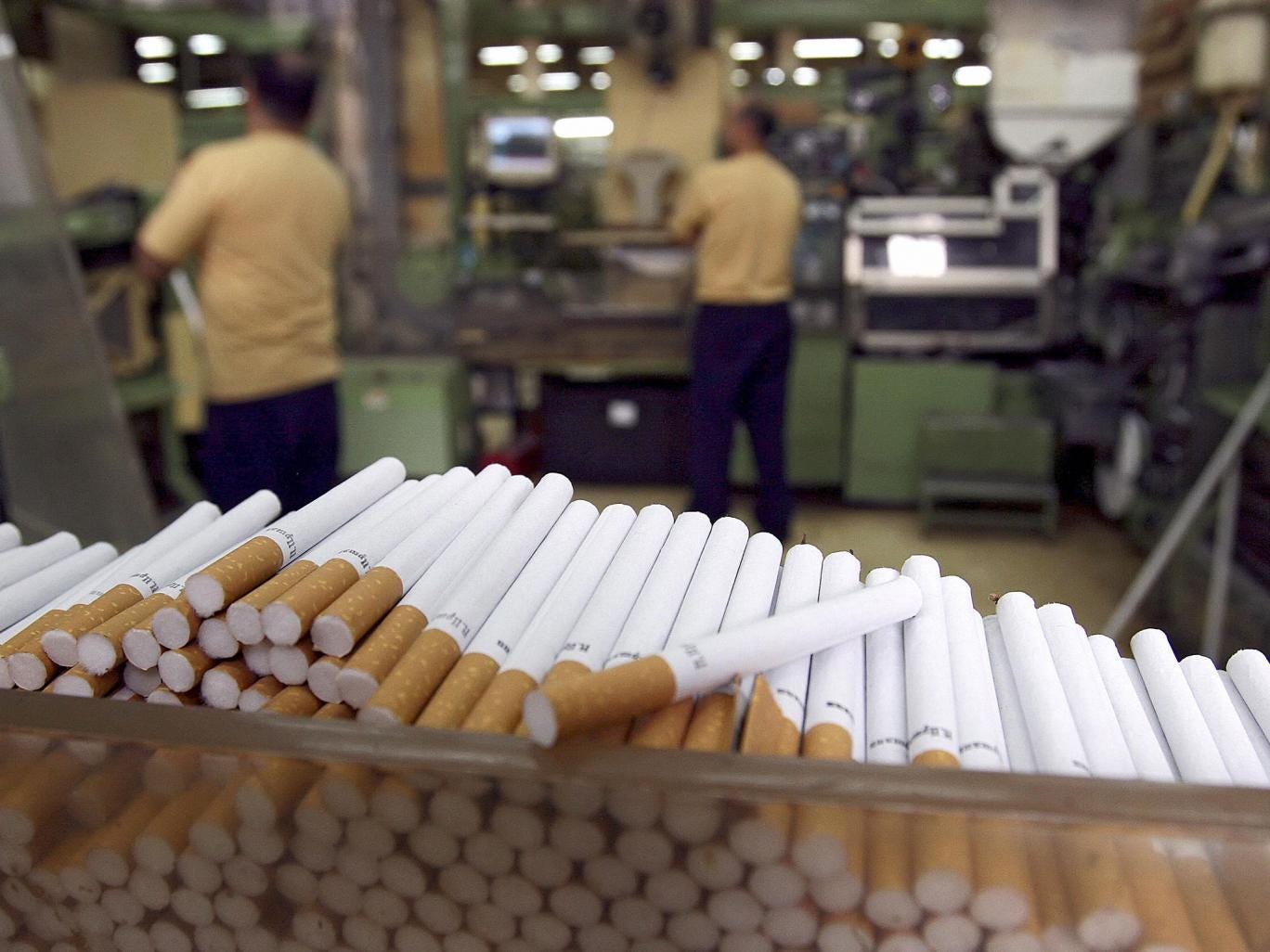
Local authority pension funds have nearly £2bn invested in the tobacco industry despite the county councils they represent being responsible for promoting public health, including anti-smoking campaigns, The Independent on Sunday can reveal.
Figures obtained under the Freedom of Information Act show for the first time the full extent to which the 99 regional pension funds, representing 4.6 million public sector workers, own shares in the tobacco giants that promote smoking around the globe.
Local authorities in England and Wales have holdings in cigarette producers worth £1.8bn, of which more than half – £953m – is invested in a single company, British American Tobacco. Continue Reading »
I feel deeply sad that the Scots decided to vote No to independence. Although Alex Salmond and the SNP definitely had their faults (especially with some of their policies), and I had more sympathies with the vision of the Radical Independence Campaign, Common Weal and the Scottish Greens, what the YES campaign did was to inspire hope that another kind of politics could happen, as George Monbiot argued so well. That there could be an alternative to the last 30 years of neoliberalism, ramped up by Margaret Thatcher and continued by New Labour. An alternative to austerity economics, which has hit the poorest the hardest, has further entrenched inequality (of wealth, property, opportunity), foodbanks, homelessness and which has given the excuse to privatise the Royal Mail, large parts of the NHS, and much more. I wanted to see if Scotland could go down a different path
Although Salmond has at times been in bed with Rupert Murdoch and Donald Trump, and had advocated lowering corporation tax if Scotland gained independence, there were signs that an independent Scotland could have gone a different direction. One of them was that Rupert Murdoch came out against some of Salmond’s allies and policies at the end, which meant the Scottish Sun didn’t support independence. Murdoch said on twitter: Continue Reading »
Article originally published on 27 April 2014 in The Independent.
Local authorities have ‘conflict of interest’ on fracking investments
By Jan Goodey, Cahal Milmo, Will Cottrell and Ed Jones
Councils that will play a key role in deciding the future of fracking in Britain have investments worth millions of pounds in companies behind the energy extraction method, The Independent can reveal.
Local authorities in areas identified as potential sources of gas have holdings via their pension funds in firms seeking to drill within their boundaries. One of the most significant investments is £1.9m held by Lincolnshire County Council’s pension fund in Total, the French company that earlier this year became the first oil major to enter Britain’s dash for shale gas, with a £30m stake in two exploration projects in the county.
West Sussex County Council also has indirect holdings in Cuadrilla, which was at the centre of controversial tests in the village of Balcombe last summer. The council also has substantial investments, currently worth £3.5m, in Centrica, the parent company of British Gas – which last year took a 25 per cent stake in a Lancashire shale-gas project operated by Cuadrilla, albeit not directly. Continue Reading »